Headlines this week claim Bitcoin “gave authorities control” in the Nancy Guthrie kidnapping case.
Read that carefully.
For years, crypto has been described as shadowy and untraceable. Now it is being credited with helping investigators gain leverage.
Both narratives cannot be true at the same time.
What this case actually exposes is not a flaw in Bitcoin. It exposes confusion about how it works.
What Actually Happened
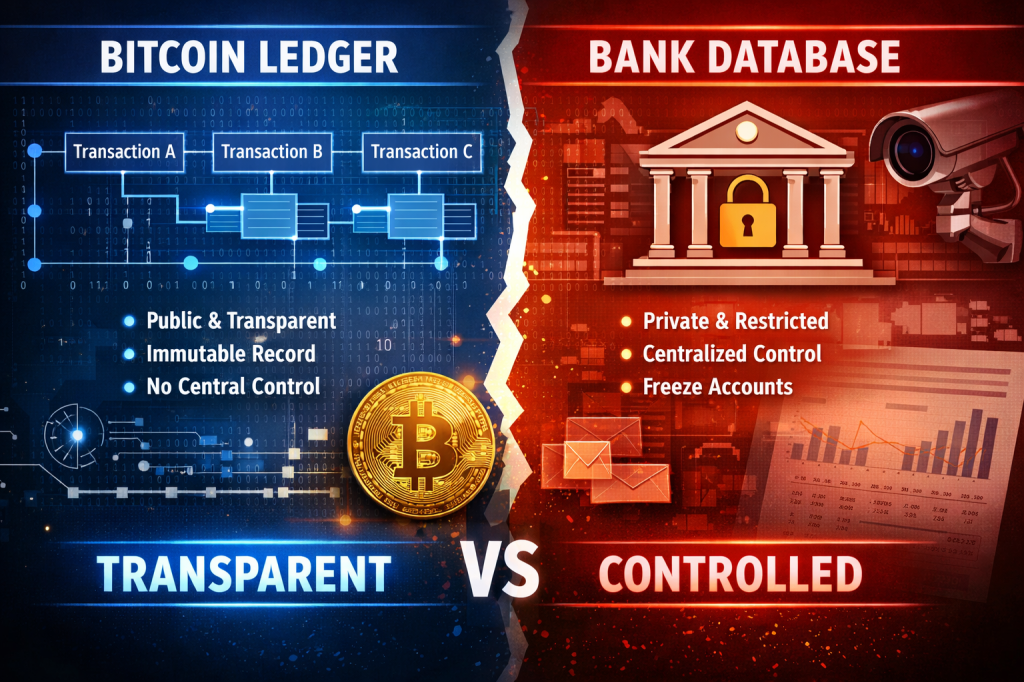
Bitcoin operates on a public, immutable ledger. Every transaction is permanently recorded and visible to anyone.
That is not a vulnerability. It is the design.
Reports indicate investigators interacted with the ransom wallet, including a small probe transaction. Even a modest transaction illuminates activity on the blockchain, revealing timing patterns, wallet relationships, and downstream flows.
From there, investigators can:
• Follow transaction trails
• Analyze wallet clustering
• Identify exchange touchpoints
• Subpoena regulated platforms for identity records
No encryption was broken.
No protocol was compromised.
No administrative control was gained.
Bitcoin functioned exactly as designed.
Transparency Is Not Control
Being able to observe transactions is not the same as being able to freeze them.
Bitcoin is transparent.
It is not centrally controllable.
Law enforcement can monitor wallet activity indefinitely. But without private keys, funds cannot be seized at the protocol level. Bitcoin has no override authority.
Courts can order disclosure. They cannot compel mathematics.
That distinction matters.
The Real Leverage Point
The leverage did not come from breaking Bitcoin.
It comes from centralized chokepoints.
If funds move through regulated exchanges or custodial services, those entities maintain identity records. Once a real world identity touches a wallet, the public ledger provides the rest.
Bitcoin’s ledger is public.
The banking system’s database is private.
But only one system allows authorities to freeze assets by directive.
Compare That to Modern Banking
Traditional banking tracks:
• Every card transaction
• Every merchant category
• Every ATM withdrawal
• Every login location
• Suspicious Activity Reports filed automatically
Governments can freeze accounts instantly through regulatory authority.
During the 2022 Canadian trucker protests, accounts were frozen by directive.
Freedom Convoy
No blockchain analysis was required. A centralized decision was executed.
Bitcoin does not eliminate surveillance.
It eliminates unilateral administrative control.
What the Guthrie Case Actually Reveals
The takeaway is simple:
• Bitcoin is public
• Bitcoin is traceable
• Bitcoin is cryptographically secure
• Bitcoin is not administratively controllable
These realities coexist.
When media swings between “crypto is untraceable and dangerous” and “crypto gave authorities control,” the problem is not the technology.
It is misunderstanding.
Bitcoin helped investigators follow the money because transparency is built into the protocol.
It did not give anyone the power to override cryptography.
Final Thought
Bitcoin is transparent by architecture.
Banking is controllable by authority.
Understanding where visibility ends and control begins is essential in any serious discussion about money.
 LimitGov
Leave a comment